
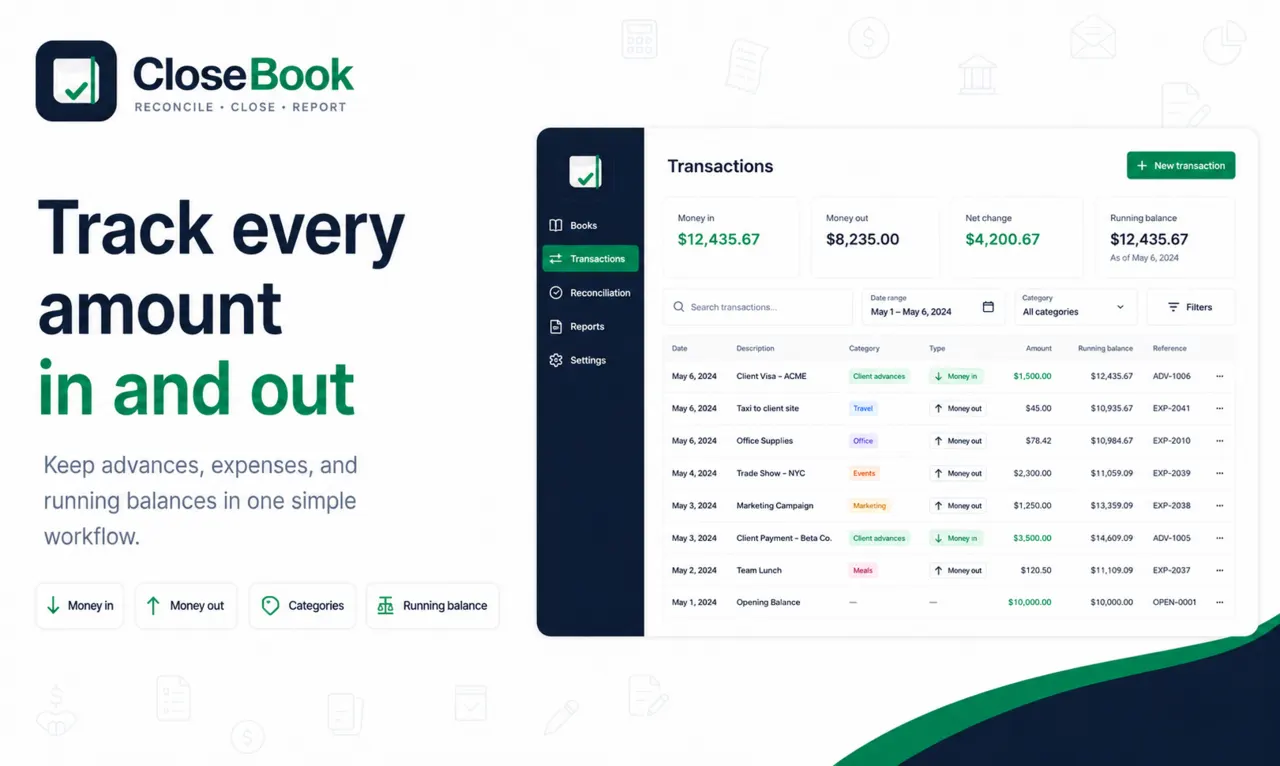
What project expense settlement should accomplish
Project expense settlement closes the gap between a temporary project budget and the record required after the work is finished. It should show what funds were received, what expenses were paid, what balance should remain, what balance actually remains and whether any difference needs explanation.
Project situations that fit this workflow
Field activity
Track transport, supplies, allowances and other temporary activity costs.
Site visit
Close a short visit budget with a documented remaining balance.
Procurement task
Record an advance issued for a defined purchase and settle the unused funds.
Client project
Keep client-provided temporary funds separate from ordinary business expenses.
Event
Track venue, transport, materials and activity expenses against the event advance.
Operational activity
Close small temporary budgets without building a full accounting workflow.
A settlement record is more than an expense report
An expense report lists costs. A settlement record also reconciles the remaining cash. That distinction is important whenever a person received money in advance and is expected to return, retain or explain the balance.
Recommended closeout process
Open a dedicated project book
Use a clear title and reference that links the book to the task or project.
Record funds by date and direction
Keep starting funds, additional funding and expenses distinguishable.
Review evidence before the final cash count
Resolve missing categories and document exceptions while the activity is still recent.
Reconcile the balance
Compare calculated funds remaining with the amount actually returned or retained.
Export and hand over
Create the closeout report and keep the audit trail with the project record.
What CloseBook does not do
CloseBook does not create a general ledger, approve expenses, verify receipts, prepare taxes or replace a company accounting system. It is a focused operational tool for temporary-fund settlement and closeout reporting.